Christmas – More Than One Story
Roy Francis provides insight into the historical roots behind our modern Christmas celebrations and Watch Night service
It’s that time again – Christmas. Where has the year gone?
As a celebration, Christmas began nearly 2,000 years ago in the 4th century in Rome. It marks the birth of Jesus Christ and although this point is often lost in the commercialisation of the event, it’s nonetheless a time of festivity: putting up Christmas trees, giving gifts, eating turkey and, for many people, drinking copious amounts of wine. Literally, the etymology of the word Christmas means ‘Christian Mass’, which is sometimes shortened to Xmas, with the X standing for the first letter of the word Christ in Greek.
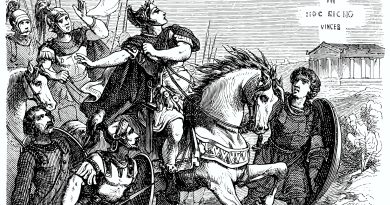
No one knows the exact day Jesus was born, as 2,000 years ago there were no accurate records or birth certificates that would tell us. What we do know about His birth is what is written in the Bible, with Luke 2:4-19 being our primary source. It would take nearly 400 years after Jesus’ death for His birth to become nationally recognised. In no small way, this was due to the Roman emperor Constantine, who became a Christian in 312AD and, by co-opting the pagan festival ‘dies solis invicti nati’ (day of the birth of the unconquered sun) and the celebration of the winter solstice, inaugurated Christmas as the birthday of Christ.
There is, however, an additional story to this, which the Church in Rome seems to have downplayed. It is the part played by African Christian, traveller and historian Sextus Julius Africanus (c.160–c.240). Born in Libya, he calculated that Jesus was conceived on March 25th, and, if we calculate nine months from then, we arrive at December 25th!
For over 1,000 years, cultural, religious and commercial influences have shaped Christmas as we know it. Christmas has been celebrated in many forms and guises – from periods of merriment to times of austerity and solemnity, like during the Puritan period in England, when Oliver Cromwell and Parliament took a dim view of the way people celebrated Christmas and the hooliganism that characterised it, and banned it.

Today, Christmas is perhaps more commercial than it is religious. It is the most popular and most expensive holiday in any given year, followed by Mother’s Day and Valentine’s Day. Canada spends the most per head on Christmas at £1,415 per household, followed by Germany, Australia and the United States. The UK follows in seventh place, with an average spend of £859 per person, with 70% of that spent on presents and 12% on food.
The Christmas season has a positive impact on an economy, creating huge demand in the toys, hospitality, food and related industries. It also has an impact on the environment, as the vast quantity of what is thrown away after Christmas testifies.
Within Britain’s Caribbean community, Christmas is as enthusiastically celebrated as it is in other communities, but in Pentecostal churches, it is hardly a special service, unlike in the Anglican churches, where the Christmas season is filled with services, the most famous of which is the Service of Nine Lessons and Carols, broadcast on Christmas Eve from King’s College Chapel, Cambridge. Easter is perhaps more important to Caribbean Christians, but the most important of all, is the Watch Night service.
I’ve been going to Watch Night services for as long as I can remember, and in our church, it’s one of the major services of the year. It’s far more important than a Christmas Eve or a Christmas Day service, and although we celebrate both, they are not as crucial as Watch Night – held on New Year’s Eve. It is the one service in the year, when everyone can reflect on the past, look forward to the New Year, and in the word of the old spiritual, thank God that ‘through many dangers toils and snares, we have already come, and it’s grace that’s brought us safe thus far, and grace will lead us on’.
The Methodist Church was the first denomination in the 18th century to popularise Watch Night Services and, in 1770, John Wesley took the idea with him to America, where it took root.
For Black American enslaved communities, December 31st, 1862, held special significance. On that night, they watched and prayed, waiting for news of their impending freedom. They had heard the rumour that President Abraham Lincoln was about to issue a declaration freeing them from their servitude. On account of this, they gathered in their huts and cabins, and stayed up all night, waiting for the news of their freedom.
When the next day came, although what became known as the ‘Emancipation Proclamation’ didn’t grant all slaves freedom – that came later with the 13th Amendment – around three million slaves, mainly from the South, were freed. Since then, Black Americans have celebrated this day in their Watch Night Services, and on New Year’s Day, they cook a big meal consisting of salted pork and ham, followed by black-eyed peas, collard greens, and cornbread to remember this historical milestone.
A Watch Night service in Black Pentecostal churches usually begins around 7.30pm and is the one time in the year when everyone in the Black community is likely to be in church –though today, it might be the only time. It is a time of singing, praying, praising, Scripture readings, a sermon, and, until recently, giving testimonies.
At about five minutes to midnight, the congregation is directed to start praying. At the stroke of midnight, signalling the beginning of the New Year, the praying stops, and everyone walks around the church, greeting, hugging and wishing each other a Happy New Year.
In many churches, the service ends soon after, although until recently, this was followed by a gospel concert that would last until the early hours of the morning. They were so popular in the 1980s, that young people would do the rounds of concerts in their area, sampling what was on offer. Today, African churches have taken up the mantle of Watch Night services, calling them ‘Cross Over’ services, which include a huge gospel concert as part of a long night of events.
In the Caribbean, especially in Jamaica, Christmas is linked to its history and celebrated in two distinct, secular ways. First, Junkanoo. The Jamaican celebrations of Junkanoo took the form at Christmas time of masked dancing, acting, processions and revelry. The tradition dates back to hundreds of years and is rooted in the memory of John Canoe (known also as ‘Jonny Konny’ and ‘January Conny’), an enslaved West African who rose up against his oppressors and became a folk hero in Jamaica. Widely used by the enslaved as part of their Christmas holiday celebrations, Junkanoo peaked in the 18th century, but out of fear, the authorities suppressed it when they found out that, during their celebrations, the enslaved communicated their escape plans with the drums, blowing of horns, and the conch shells that they used. Also, like Canboulay in Trinidad, their dancing and the exaggerated costumes they made and wore, were their way of mocking their enslavers.
In Jamaica, Christmas is also a special time, and in December 1831, the island was ablaze with tens of thousands of enslaved, fighting for their freedom. Known as the Christmas Rebellion or Baptist War – as many of the enslaved had converted to the faith – it was the largest enslaved uprising in the history of the British West Indies, and directly led to the abolition of slavery in 1833 and full emancipation thereafter in 1838.
While Black Pentecostals look forward to Christmas and celebrate it enthusiastically, Watch Night service is what they really look forward to during the Christmas season. Theologically, they use several biblical references to emphasise the idea of Jesus returning, and therefore stress the notion of watching, praying, and being prepared. Watch Night emphasises this, and Pentecostals often quote the story of Jesus in the garden of Gethsemane (Matthew 26:38-42); Jesus before His crucifixion; Jacob in the Old Testament, wrestling with an Angel until daybreak… all examples of watching and being prepared for, as Pentecostals believe, no one knows the day nor the hour that Christ will return, so like Christmas, they must be prepared for the return of Christ.
ROY N FRANCIS
Former BBC TV producer, founder of Roy Francis of Productions and author of Windrush: 7 Events That Changed Britain. Visit www.royfrancis.co.uk